The Indian automotive and financial sectors are witnessing dynamic shifts in 2026, driven by sustainability pushes, electric mobility adoption, and smart banking innovations. Keywords like auto sweep account, Bajaj RE electric auto price, and Jamna auto industries share price highlight interconnected trends in efficient finance management, eco-friendly transportation, and auto component performance. This article explores these elements in detail, providing updated insights for investors, commuters, and savers in India, particularly in regions like Rajasthan where three-wheelers dominate last-mile connectivity.
Understanding Auto Sweep Accounts: Smart Banking for Higher Returns
An auto sweep account is a popular banking feature in India that automatically transfers surplus funds from your savings account to a linked fixed deposit (FD) when the balance exceeds a predefined threshold. This “sweep-out” mechanism ensures idle money earns higher FD interest rates (often 6-8% p.a.) instead of the typical 2.5-4% from savings accounts, while maintaining full liquidity.
How it works: Banks set a threshold, such as ₹25,000 to ₹1 lakh. Excess amounts are swept into short-term FDs (often 7-90 days tenure). When your savings balance falls below a set limit (due to withdrawals), funds “sweep-in” from the FD automatically—no penalties or manual intervention required. This dual sweep-in and sweep-out process balances earning potential with accessibility.
Major banks offering this in 2026 include Axis Bank, IDFC FIRST Bank, Kotak Mahindra, SBI (via Sweep-Out FD), and DBS digibank. For instance, IDFC FIRST provides auto-sweep with up to 6.50% interest, while SBI requires a minimum balance like ₹50,000 for activation in certain accounts. Benefits include:
- Higher earnings on surplus without locking funds permanently.
- Automated convenience—no need to monitor balances or create FDs manually.
- Liquidity—funds return instantly for emergencies or payments.
- Tax efficiency—interest earned is taxable, but the feature optimizes overall returns.
In 2026, with rising inflation and digital banking adoption, auto sweep facilities are gaining traction among salaried professionals and small business owners. Activate it via net banking or branch; check your bank’s app for eligibility. It’s ideal for maintaining average monthly balances while boosting passive income.
Bajaj RE Electric Auto: Price, Specs, and the Shift to Green Mobility
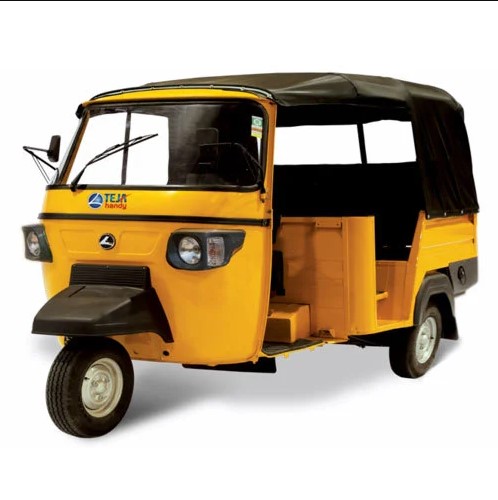
The Bajaj RE electric auto price remains a key focus for commercial operators transitioning to electric vehicles (EVs). Bajaj Auto’s RE series, a staple in India’s three-wheeler market, now emphasizes electric variants amid government subsidies and emission norms.
The flagship electric model is the Bajaj RE E-TEC 9.0, powered by an 8.9 kWh lithium-ion (LFP) battery with IP67 protection. Key specs include:
- Certified range: Up to 178 km per charge (ARAI-tested).
- Top speed: 45 km/h (Eco mode 40 km/h).
- Charging: On-board charger, full charge in about 4-5 hours (80% in under 3 hours).
- Motor: Advanced PMS (Permanent Magnet Synchronous) with 2-speed automatic transmission for better gradeability.
- Features: Tubeless radial tyres, robust chassis, low maintenance, and zero tailpipe emissions.
Pricing in 2026: Ex-showroom starts around ₹3.10 lakh to ₹3.35 lakh (post-subsidy under schemes like EMPS or FAME). This is higher than traditional fuel variants (CNG/Petrol RE at ₹2.22-2.53 lakh), but running costs are drastically lower—around ₹40 per 100 km versus fuel-based alternatives. Variants like Bajaj Riki P4005 E offer a 149 km range at about ₹1.91 lakh, targeting budget-conscious buyers.
Why the buzz? Electric autos reduce operational costs by 50-70% (electricity vs. CNG/fuel), align with India’s net-zero goals, and benefit from incentives. In cities like Jaipur, where traffic and pollution are concerns, the RE E-TEC suits passenger and cargo needs with reliable performance on inclines. Bajaj’s widespread service network ensures minimal downtime. For operators, financing options and lower TCO (total cost of ownership) make it a smart 2026 investment.
Traditional Bajaj RE models (CNG/Diesel) continue strong, with prices from ₹2.22 lakh (Petrol) to ₹2.53 lakh (CNG), offering 40+ kmpl mileage and BS-VI compliance.
Jamna Auto Industries Share Price: Performance and Outlook in 2026
Jamna auto industries share price reflects the health of India’s auto ancillaries sector, particularly leaf springs and suspension components. Jamna Auto Industries Ltd. (NSE: JAMNAAUTO) is a leading player supplying to OEMs like Tata, Mahindra, and Ashok Leyland.
As of late February 2026, the share price hovers around ₹143-147 on NSE/BSE, with recent gains of 1-3% in sessions. Market cap stands at approximately ₹5,700-5,800 crore. Key metrics:
- 52-week high: ₹152.60 (February 2026).
- 52-week low: ₹68.57.
- P/E ratio: Around 28-29.
- Dividend yield: ~1.45%.
- Promoter holding: ~49.9%.
- ROE/ROCE: Strong at 20%+ levels.
The stock has delivered impressive returns—up over 88% in the past year—driven by rising vehicle production, EV transition demand for lightweight components, and export growth. Jamna benefits from the auto industry’s recovery and focus on commercial vehicles, where suspensions are critical.
Analysts note positive momentum from infrastructure projects boosting CV sales and stable raw material costs. However, volatility from global supply chains and interest rates persists. For investors, it’s a mid-cap play in a growing sector, with potential for further upside if EV adoption accelerates (demanding advanced suspension tech).
Connecting the Dots: Finance, Mobility, and Auto Ecosystem
These keywords intersect meaningfully. An auto sweep account optimizes savings for buying assets like a Bajaj RE electric auto, whose higher upfront cost is offset by lower running expenses—freeing capital for investments. Meanwhile, companies like Jamna Auto supply parts to Bajaj and others, so strong auto sales (including EVs) support share performance.
In 2026, sustainability drives decisions: Opt for electric autos to cut emissions and costs, use auto sweep for better financial efficiency, and track ancillaries like Jamna for sector exposure.
For Rajasthan commuters or investors, these trends offer practical advantages—affordable green transport, smarter banking, and growth-oriented stocks.
In summary, 2026 brings accessible innovations across finance and mobility. Whether managing idle funds via auto sweep, investing in Bajaj’s electric future, or eyeing Jamna’s market gains, these elements empower better decisions in India’s evolving economy.
Leave a Reply